

In today’s fast-moving digital world, businesses are constantly searching for smarter ways to attract customers, convert leads, and scale efficiently. Traditional marketing methods are no longer enough. You need automation, data-driven insights, and seamless customer experiences—all in one place.
That’s exactly where HubSpot comes in.
Whether you’re a startup founder, a small business owner, or a marketing professional, HubSpot offers a complete ecosystem designed to help you grow faster and smarter. In this comprehensive guide, we’ll break down everything you need to know about HubSpot, how it works, and why it’s one of the most powerful tools you can use in 2026.
What is HubSpot?
HubSpot is an all-in-one customer platform that combines marketing, sales, customer service, content management, and operations tools into a single unified system.
Instead of juggling multiple tools for email marketing, CRM, automation, analytics, and customer support, HubSpot brings everything together under one roof.
At its core, HubSpot helps businesses:
- Attract the right audience
- Convert visitors into leads
- Close deals more effectively
- Delight customers for long-term retention
Why HubSpot Stands Out in 2026
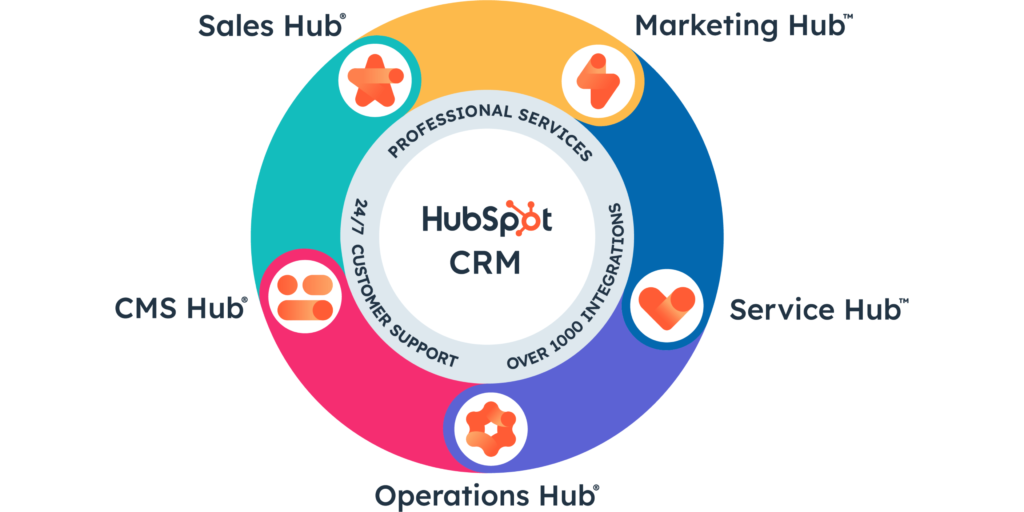
There are hundreds of marketing tools available today—but HubSpot continues to dominate for several key reasons:
1. All-in-One Ecosystem
Most businesses struggle with fragmented systems—one tool for email, another for CRM, another for automation.
HubSpot eliminates this problem by offering:
- Marketing Hub
- Sales Hub
- Service Hub
- CMS Hub
- Operations Hub
Everything is connected, which means your data flows seamlessly across your entire business.
2. Powerful Free CRM
One of the biggest advantages of HubSpot is its free CRM, which is robust enough for many businesses to get started without spending anything.
With the CRM, you can:
- Track customer interactions
- Manage contacts and deals
- Monitor sales pipelines
- Automate follow-ups
This makes it ideal for beginners and growing businesses alike.
3. Marketing Automation Made Easy
Automation is no longer optional—it’s essential.
HubSpot allows you to automate:
- Email campaigns
- Lead nurturing sequences
- Customer onboarding workflows
- Follow-ups based on user behavior
The best part? You don’t need to be a tech expert. The platform is designed with a user-friendly interface that simplifies even complex automation.
How HubSpot Helps You Grow Your Business
Let’s break down how HubSpot supports every stage of your business growth.
Stage 1: Attracting Traffic
HubSpot provides powerful tools to bring the right audience to your website:
- SEO recommendations
- Blog publishing tools
- Social media scheduling
- Content strategy planning
Instead of guessing what content works, HubSpot gives you data-backed insights to improve your visibility.
Stage 2: Converting Leads
Once visitors land on your website, the next step is converting them into leads.
HubSpot makes this easy with:
- Landing pages
- Lead capture forms
- Pop-ups and CTAs
- A/B testing
You can create high-converting funnels without needing a developer.
Stage 3: Closing Sales
Turning leads into customers is where many businesses struggle.
HubSpot’s Sales Hub helps you:
- Track deals in real time
- Automate follow-ups
- Schedule meetings
- Send personalized emails
Sales teams can focus more on closing and less on manual tasks.
Stage 4: Retaining Customers
Customer retention is just as important as acquisition.
With HubSpot’s Service Hub, you can:
- Manage customer tickets
- Provide live chat support
- Build knowledge bases
- Collect feedback
Happy customers are more likely to return—and recommend your business.
Key Features That Make HubSpot a Must-Have
Let’s dive deeper into the features that truly set HubSpot apart.
1. Email Marketing
HubSpot’s email marketing tool allows you to:
- Create professional email campaigns
- Personalize content using customer data
- Track open rates and click-through rates
- Optimize campaigns for better performance
This ensures your messages reach the right people at the right time.
2. CRM Integration
Everything in HubSpot revolves around its CRM.
This means:
- Every email, call, and interaction is tracked
- You get a complete view of your customers
- Your team stays aligned and informed
No more lost data or miscommunication.
3. Analytics and Reporting
Data drives decisions—and HubSpot excels here.
You can track:
- Website performance
- Campaign ROI
- Sales metrics
- Customer behavior
These insights help you continuously improve your strategy.
4. Content Management System (CMS)
HubSpot’s CMS allows you to build and manage your website without technical expertise.
Features include:
- Drag-and-drop editing
- SEO optimization
- Fast and secure hosting
- Personalized content experiences
This makes it perfect for businesses that want flexibility without complexity.
5. Automation Workflows
One of HubSpot’s most powerful features is its workflow automation.
You can:
- Send emails based on user actions
- Assign leads to sales reps automatically
- Trigger notifications
- Segment audiences dynamically
This saves time and increases efficiency across your organization.
Who Should Use HubSpot?
HubSpot is designed for a wide range of users, including:
1. Small Business Owners
If you’re running a small business, HubSpot helps you manage everything in one place without needing multiple tools.
2. Startups
Startups benefit from the free CRM and scalable features as they grow.
3. Marketing Professionals
Marketers can create, execute, and analyze campaigns more effectively.
4. Sales Teams
Sales teams gain better visibility into pipelines and customer interactions.
Real Benefits of Using HubSpot
Here are some tangible advantages you can expect:
- Increased lead generation
- Higher conversion rates
- Improved customer relationships
- Better team collaboration
- Time-saving automation
- Data-driven decision making
These benefits compound over time, leading to sustainable growth.
How to Get Started with HubSpot
Getting started is simple—and you can begin for free.
Step 1: Sign Up
Create your account here:
👉 https://go.try-hubspot.com/9VVb1E
Step 2: Set Up Your CRM
Import your contacts and organize your data.
Step 3: Create Your First Campaign
Start with a simple email campaign or landing page.
Step 4: Automate Your Processes
Set up workflows to save time and improve efficiency.
Step 5: Analyze and Optimize
Use HubSpot’s analytics to refine your strategy and improve results.
Pro Tips to Maximize Your Results
To get the most out of HubSpot, keep these strategies in mind:
1. Focus on Content First
High-quality content drives traffic and builds trust.
2. Use Automation Wisely
Don’t over-automate—keep your messaging personal and relevant.
3. Segment Your Audience
Targeted messaging leads to better conversions.
4. Track Everything
Use data to guide your decisions.
5. Continuously Optimize
Marketing is never “set and forget.”
Common Mistakes to Avoid
Even with a powerful tool like HubSpot, mistakes can happen.
Avoid these pitfalls:
- Not using the CRM effectively
- Ignoring analytics
- Overcomplicating workflows
- Neglecting customer experience
- Failing to align marketing and sales
Keeping things simple and strategic is key.
Is HubSpot Worth It?
Absolutely.
HubSpot is not just a tool—it’s a complete growth platform.
While there are other options available, few offer the same combination of:
- Ease of use
- Scalability
- Integration
- Value
Whether you’re just starting out or scaling a large business, HubSpot adapts to your needs.
Final Thoughts
In 2026, success in business depends on efficiency, automation, and delivering exceptional customer experiences.
HubSpot brings all of this together in one powerful platform.
If you’re serious about growing your business, improving your marketing, and increasing your revenue, now is the time to take action.
👉 Get started with HubSpot here:
https://go.try-hubspot.com/9VVb1E
By leveraging HubSpot’s full potential, you’re not just using a tool—you’re building a system for long-term success.
The sooner you start, the faster you grow.
