

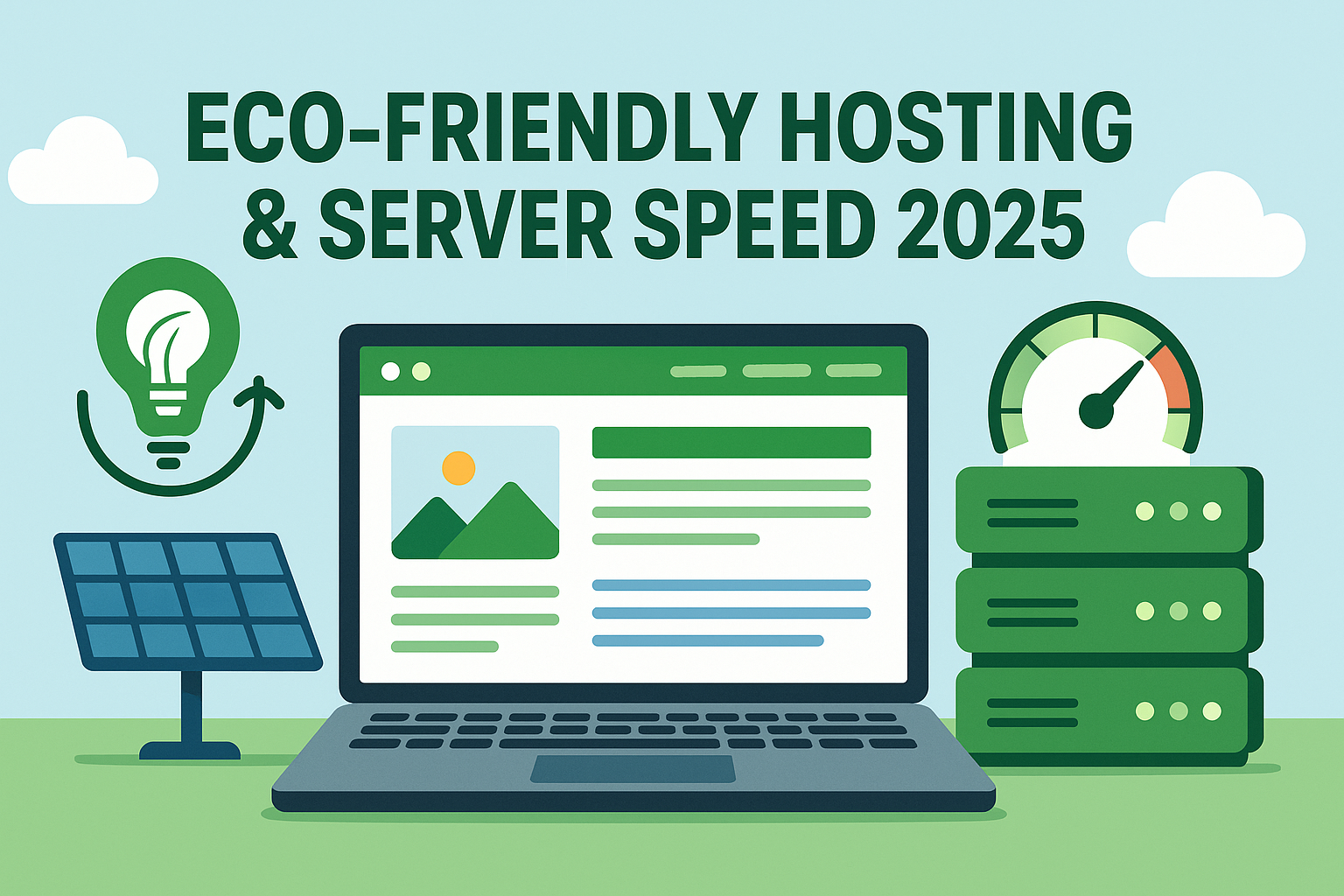
In 2025, building a website isn’t just about aesthetics or content—it’s also about performance, sustainability, and search engine rankings. Choosing an eco-friendly hosting provider can help reduce your website’s environmental impact, while server speed plays a critical role in improving your SEO and user experience. This guide explains how eco-friendly hosting and server speed can boost your website’s performance and rankings.
Table of Contents
- Introduction
- What is Eco-Friendly Hosting?
- Why Server Speed Matters for SEO
- How Hosting Affects Website Performance
- Eco-Friendly Hosting Providers with Fast Servers
- Tips to Improve Server Speed
- Conclusion
1. Introduction
Sustainable business practices are gaining importance, even in web development. Eco-friendly hosting uses renewable energy or energy-efficient servers to reduce carbon footprint. At the same time, fast-loading websites keep visitors happy and improve your search engine rankings. Combining sustainability with performance is a win-win for website owners.
2. What is Eco-Friendly Hosting?
Eco-friendly hosting providers focus on:
- Renewable Energy: Using solar, wind, or hydro-powered data centers.
- Energy Efficiency: Servers and data centers optimized to use less power.
- Carbon Offsets: Supporting environmental initiatives to compensate for emissions.
Popular eco-friendly hosting providers include GreenGeeks, A2 Hosting, SiteGround, and HostPapa.
3. Why Server Speed Matters for SEO
Search engines, especially Google, prioritize fast-loading websites because they improve user experience. Here’s why server speed matters:
- Better User Experience: Slow websites frustrate visitors, increasing bounce rates.
- Higher SEO Rankings: Google’s Core Web Vitals consider loading speed as a ranking factor.
- Increased Conversions: Faster websites lead to higher engagement and sales.
Even eco-friendly hosting can offer fast servers if optimized correctly.
4. How Hosting Affects Website Performance
Your hosting plan directly impacts website speed:
- Shared Hosting: Affordable but may share resources, slowing your site during traffic spikes.
- VPS Hosting: Offers dedicated resources for better speed.
- Cloud Hosting: Scales resources automatically, ensuring consistent performance.
- Dedicated Hosting: Maximum speed and control for high-traffic websites.
Eco-friendly hosts often use modern, energy-efficient hardware and CDNs (Content Delivery Networks) to maintain high performance.
5. Eco-Friendly Hosting Providers with Fast Servers
Here are some top eco-friendly hosting providers that combine speed and sustainability:
- GreenGeeks: Renewable energy powered, fast SSD servers, free CDN.
- A2 Hosting: Turbo servers for fast loading times, environmentally conscious data centers.
- SiteGround: Optimized servers with excellent uptime and energy-efficient infrastructure.
- HostPapa: Uses green energy, beginner-friendly, solid speed and performance.
6. Tips to Improve Server Speed
Even with eco-friendly hosting, you can boost performance:
- Use a Content Delivery Network (CDN): Distribute content globally for faster load times.
- Optimize Images: Compress images without losing quality.
- Enable Caching: Reduce server load and improve page speed.
- Choose the Right Hosting Plan: VPS or cloud hosting offers dedicated resources for consistent speed.
- Minimize Plugins and Scripts: Too many plugins can slow down your website.
7. Conclusion
Eco-friendly hosting is no longer just a “nice-to-have”—it’s a smart choice for businesses and bloggers who care about the environment. Combining sustainable hosting with fast servers ensures:
- Reduced carbon footprint
- Improved user experience
- Better search engine rankings
- Increased conversions
Friendly tip: Always check server speed metrics and Core Web Vitals when choosing a green hosting provider. With the right hosting plan, your website can be fast, sustainable, and SEO-friendly in 2025.
